Head hopping on All Hallows
One of the dangers of close third person is head-hopping, where the reader jumps between different characters within the same scene.
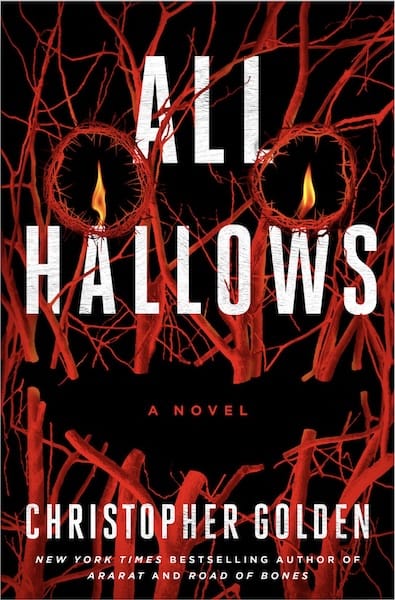
I read Christopher Golden's All Hallow's recently. It's set in a neighbourhood in 1984, on Halloween. It follows a range of protagonists, as the "cunning man" comes to claim new victims. Like all of Golden's books, it's well written, neither too bombastic or over stylised, but effective and efficient prose.
However, this post is not really about the book, but rather that it made me consider one of the tensions one faces as a horror writer, because I felt that it tested the limits of this. For some readers, this succeeds, and for others it detracts from the book, as the mix of reviews on Goodreads illustrates.
The tension arises from adopting the close third person perspective. This is an effective choice in all fiction, but horror in particular. As a reader you want to feel what the individual feels, to empathise with them and experience fear, dread, terror. The first person may be more effective but it can also limit you in the number of characters. The omniscient point of view gives a broader scope, but loses some of the intimacy.
So, close third person point of view is an ideal choice, as a reader you are occupying the mind of the character but with some of the authorial voice and scope available also. The Darling Axe makes an important distinction between this and first person: "the narrator takes on the voice of the character. That means the narrator is not the author."
One of the dangers of close third person is head-hopping, where the reader jumps between different characters within the same scene. This often arises because it becomes difficult to tell a story from one character only. But it is jarring. In All Hallows, Golden doesn't commit this sin, as each chapter is titled with the name of the character we will be viewing it from. But the book has around 20 different perspectives we shift between. Even when they are conveniently separated and titled, this is getting at the upper limit of characters and concerns the reader can easily switch between. Particularly when they are at different stages of awareness of the story, are dealing with a range of personal issues, and we may not have been in their heads for the preceding few chapters.
I think he just about gets away with it, but I found myself having to make an effort to recall who each one was, how they related to the others, and what their last significant event was. Genres like epic fantasy often have way more characters than this, but in a story that unfolds over a night and you want to maintain tension, it can slow the plot and cause a loss of momentum.